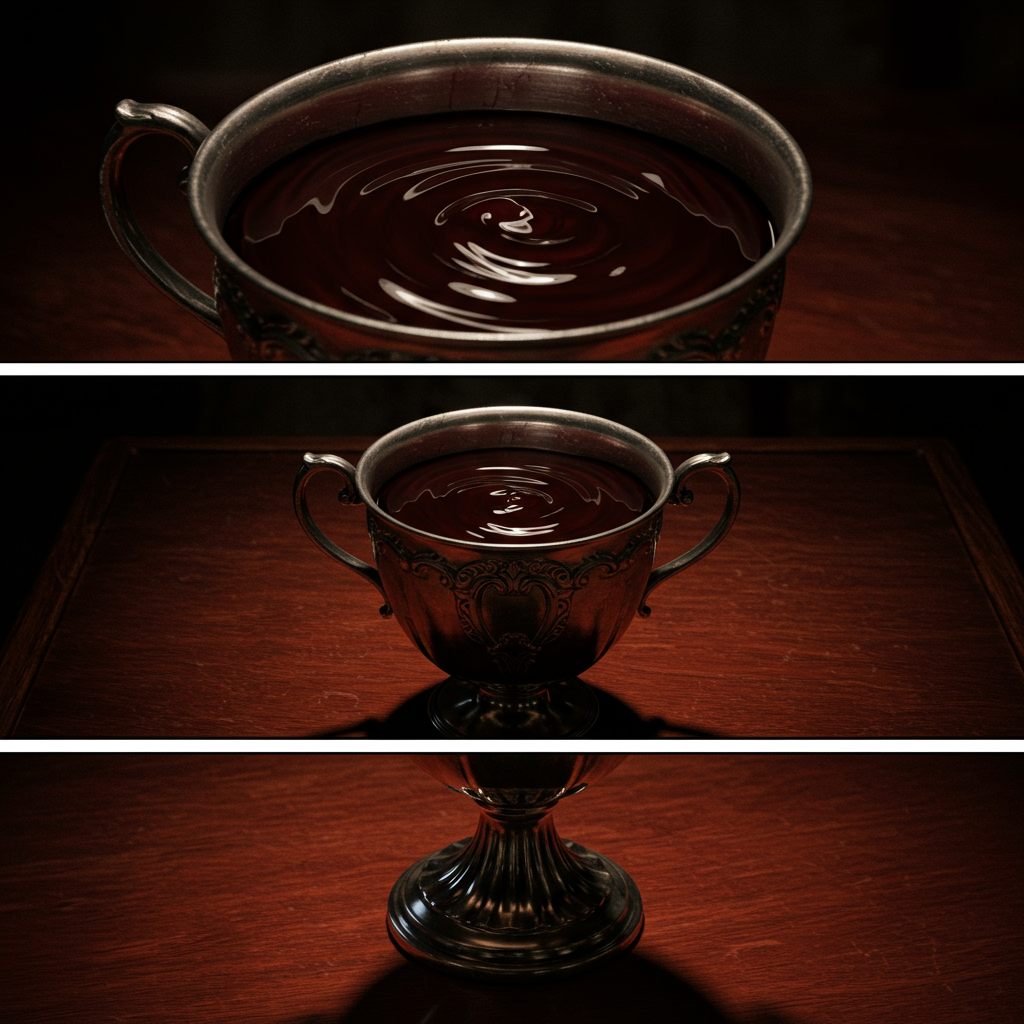
In the lexicon of unsettling imagery, few compositions are as starkly effective, or as minimalist, as ‘cup on table, cup, blood.’ This simple arrangement is profoundly defined by its capacity to generate immediate narrative dread.
### The Disruption of Domesticity
The setting—a plain table—instantly suggests normalcy, domesticity, and routine. It is the familiar plane upon which human interaction, nourishment, and crucial decision-making typically occur. This inherent expectation of safety makes the intrusion of the second and third elements—the cup and, crucially, the blood—exponentially more disturbing.
The cup itself transcends its utility, becoming a chalice of consequence. Whether fashioned from ceramic, polished silver, or worn wood, it is no longer merely holding liquid; it now cradles the profound marker of life and violence.
### The Shock of Violation
Crimson and viscous, the blood violently defies the expected contents of a cup—tea, water, or wine. This violation of domestic expectation forces the viewer into immediate interpretive mode. We are compelled to ask: What just happened?
Is this the hastily abandoned evidence of a mortal struggle? Is it a macabre ritual offering, a silent communion with something ancient and demanding? Or is the symbolism more profound—the physical manifestation of guilt, the cost of a decision, or a sacrifice made just moments before?
### The Story in Stasis
What makes this composition uniquely terrifying is its absolute stillness. The blood is not spilled; the table remains undisturbed. Everything exists in a state of suspended animation, suggesting a sudden, conclusive departure or a moment of absolute decision that has just concluded.
This stasis is the story. The viewer is left to construct the immediate past and anticipate the terrifying future. The object—the unsettling chalice—functions as the narrative anchor, concentrating all the horror and mystery into a single, perfectly balanced composition of dread.