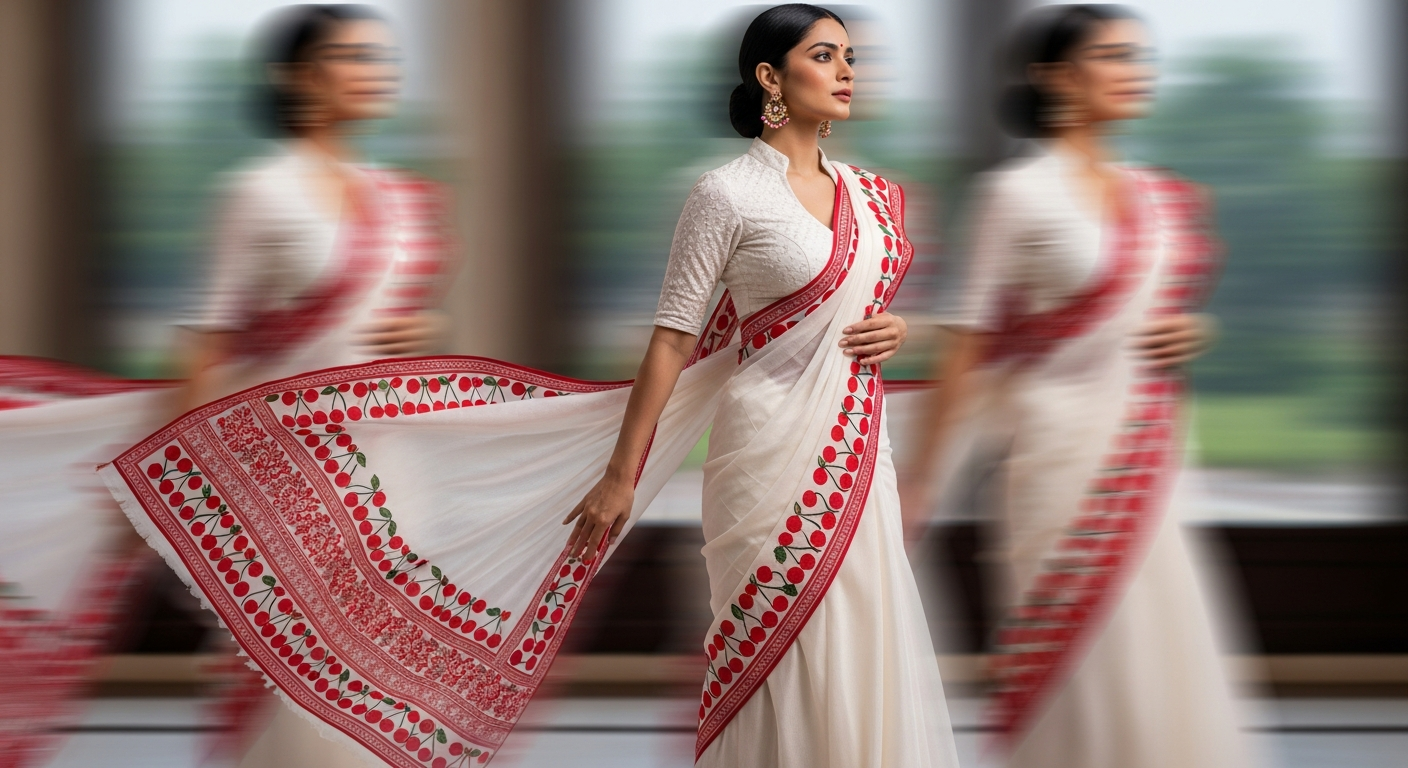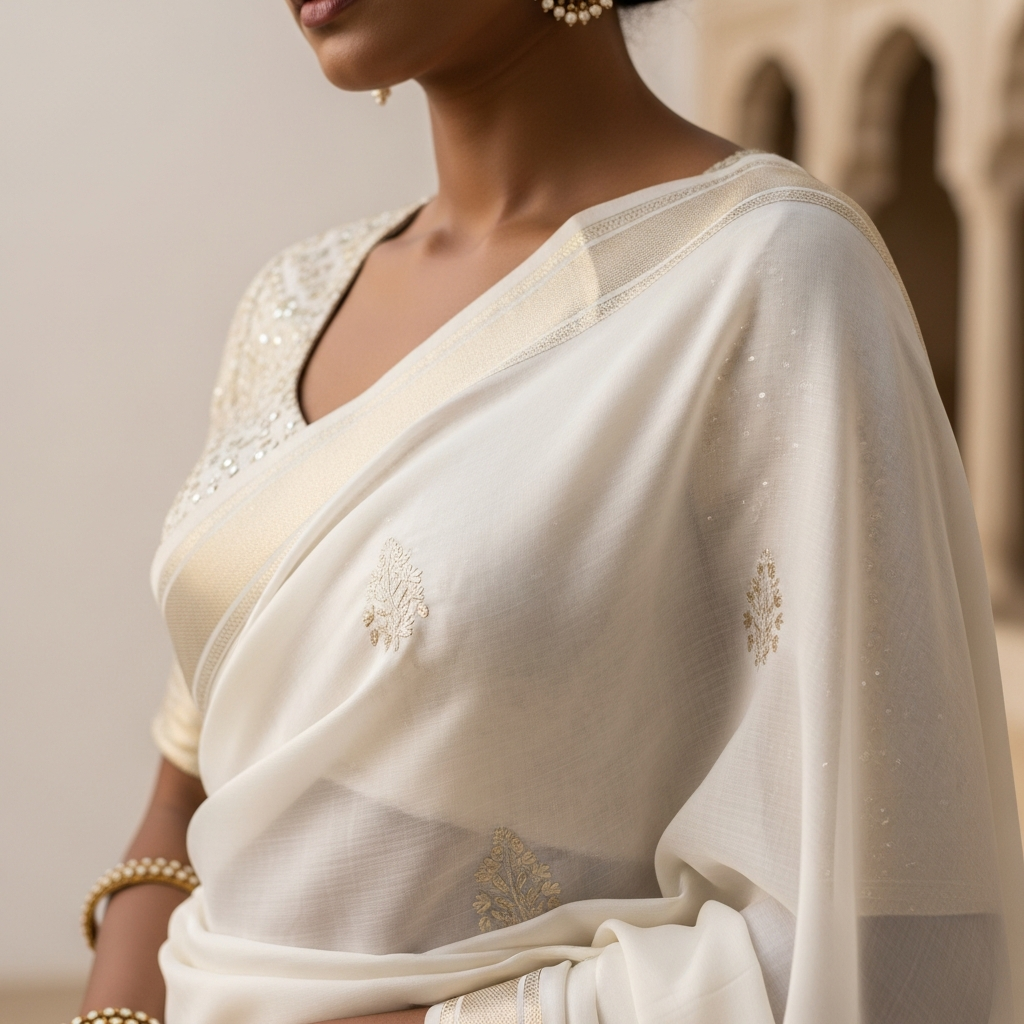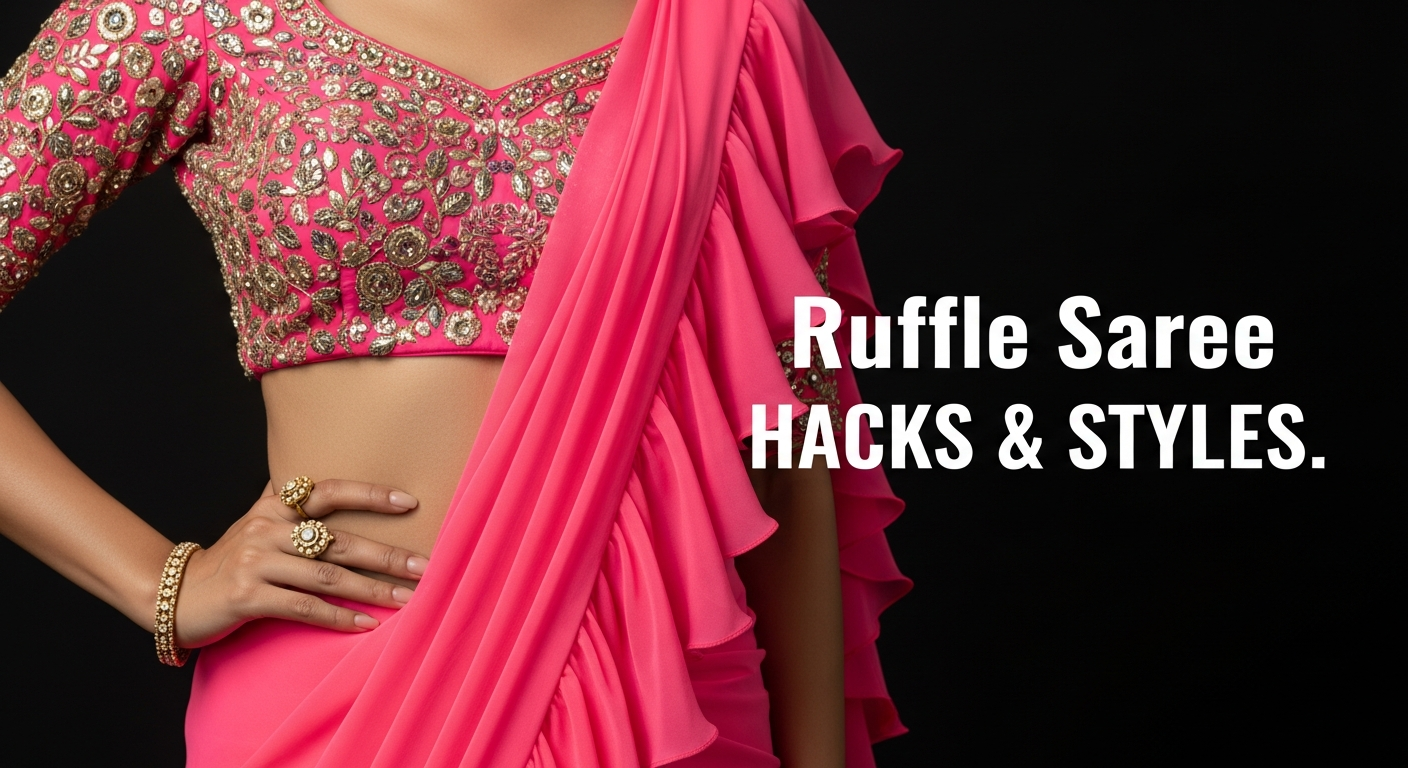


 The saree, the quintessential garment of Indian femininity, has continuously evolved, adapting to modern aesthetics while retaining its core elegance. One of the most dynamic and popular modern iterations is the ‘ruffles saree’ or ‘ruffled saree.’ This design infuses volume, texture, and movement into the traditional six yards, making it a favorite for cocktail parties, contemporary weddings, and festive occasions.
The Rise of the Ruffled Saree
While ruffles were historically confined mostly to lehengas or blouse details, their integration into the saree pallu and border is a relatively recent phenomenon, heavily popularized by contemporary Indian designers like Sabyasachi, Manish Malhotra, and particularly Arpita Mehta, who champion modern silhouettes. The ruffled saree addresses the modern woman’s desire for a garment that is both rooted in culture and high on fashion impact.
Anatomy and Styles
Ruffled sarees are defined by the layering of fabric along the edges, creating a waterfall or cascade effect. The key variations include:
1. The Border Ruffle: The most common style, featuring ruffles applied only along the lower border of the drape and the edges of the pallu. This offers a sophisticated, subtle volume.
2. Tiered Ruffles: Multiple layers of ruffles extending vertically across the pallu or the bottom pleats. This creates maximum volume and drama, often seen in lightweight fabrics like georgette or organza.
3. Full Flare Ruffles: The entire pallu is composed of voluminous ruffles, resulting in a dramatic, almost flamenco-dancer aesthetic. These often pair best with simpler, fitted blouses to balance the flair.
4. Pre-Draped Ruffle Sarees: These are structured, easy-to-wear versions, often featuring a stitched skirt section with defined ruffles, eliminating the hassle of traditional draping.
Fabric and Color Choices
The choice of fabric is crucial for the success of the ruffle effect. Lightweight, flowy materials are preferred as they hold the ruffle shape without making the wearer look bulky:
- Georgette and Chiffon: Ideal for achieving soft, graceful ruffles that move beautifully.
- Organza: Offers structure, making the ruffles crisp and voluminous.
- Net and Tulle: Used for creating delicate, frothy ruffles, often in pastel or neon shades.
Color palettes range from classic blacks, reds, and metallics (perfect for evening wear) to vibrant neons and sophisticated pastels (ideal for day functions or destination weddings).
Styling the Ruffled Saree
Styling a ruffled saree requires balancing the inherent volume with sleek elements:
- The Blouse: Since the saree already provides drama, the blouse can either be sleek or match the flamboyance. Popular choices include corsets, halter necks, off-the-shoulder designs, or dramatic puff sleeves if the ruffles are subtle.
- Accessories: Minimalist, statement jewelry works best. If the ruffles are heavy, opt for delicate earrings and skip the neckpiece. A contemporary waist belt can cinch the waist, adding structure and modernity to the flowy silhouette.
- Footwear: Heels are essential to elevate the drape and prevent the ruffles from dragging.
Maintenance
Due to the delicate structure, ruffled sarees often require careful maintenance. It is advisable to opt for dry cleaning and store them properly, avoiding heavy folding that could crush the ruffle layers.