Introduction: The Silent Echo of Midnight
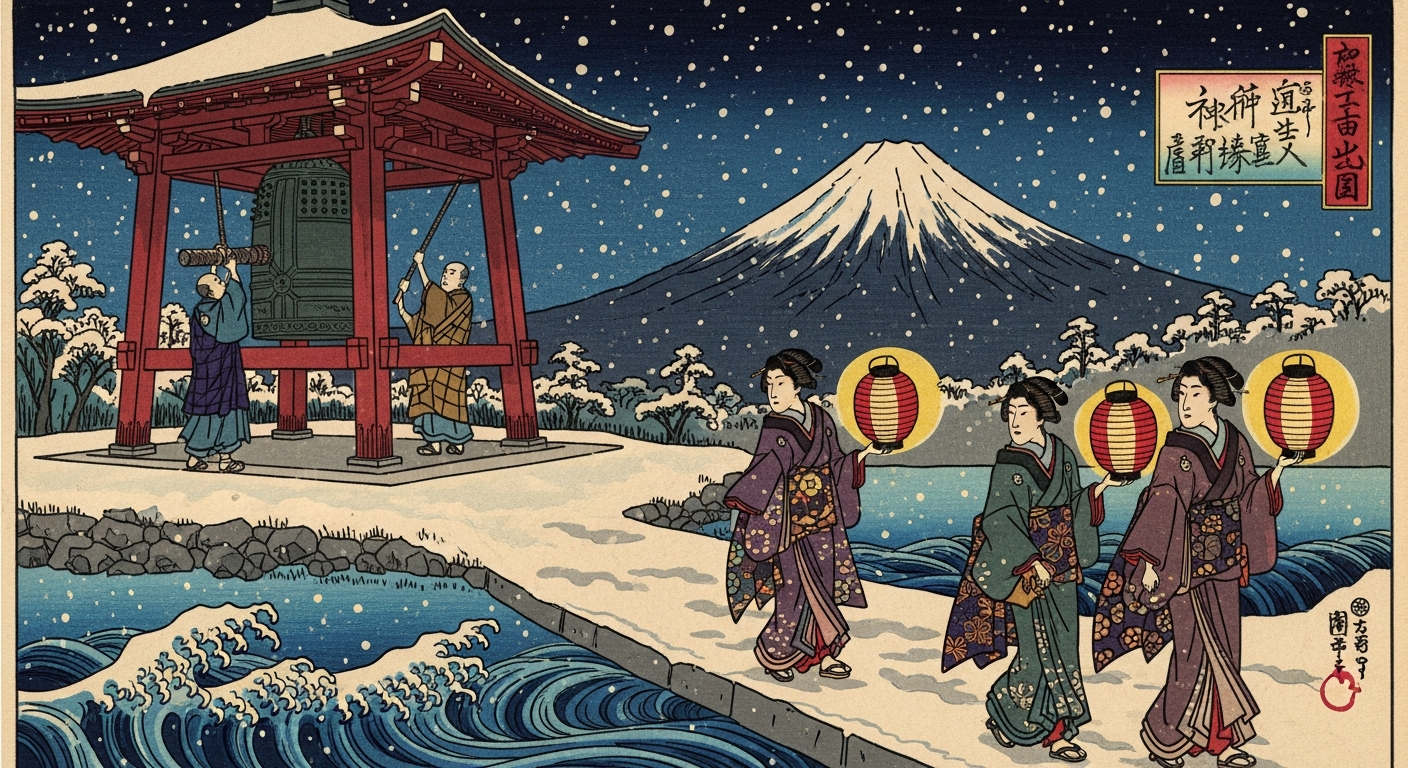
This artistic concept transports us to a moment of profound tranquility—the striking of a massive temple bell (*Bonshō*) at midnight in Japan. Rendered in the time-honored style of Ukiyo-e woodblock printing, the scene captures the cultural richness and aesthetic purity of the Edo period. Against a backdrop of falling snow and the imposing, eternal silhouette of Mount Fuji, the composition is a harmonious blend of nature, ritual, and human presence.
The Enduring Tradition of Ukiyo-e
Ukiyo-e, meaning ‘pictures of the floating world,’ was a dominant art form in Japan from the 17th to the 19th centuries. Characterized by its use of woodblock printing (*moku-hanga*), this style captured the transient pleasures and everyday life of the burgeoning urban culture—kabuki actors, courtesans, and, later, stunning landscapes.
Key aesthetic features present in this concept include:
- Nishiki-e (Brocade Pictures): Use of multiple flat, vibrant colors.
- Katsura-zuri: Intricate black line work defining shapes.
- Color Palette: Utilizing deep indigo blues and vermilion reds.
Masters like Hokusai and Hiroshige perfected the art of landscape Ukiyo-e, focusing on iconic subjects like Mount Fuji, elevating the genre to timeless masterpieces.
Decoding the Symbols in the Midnight Scene
Each element in this midnight scene carries significant cultural weight:
### 1. The Temple Bell (*Joya no Kane*)
The striking of the bell at midnight often refers to the *Joya no Kane*, the 108 strikes performed on New Year’s Eve. This ritual is meant to purify the listeners from the 108 worldly desires (*bonnō*) in Buddhist belief. The sound signifies the passage of time and spiritual purification.
### 2. Mount Fuji (*Fuji-san*)
Japan’s most sacred mountain, Mount Fuji is the ultimate symbol of permanence, beauty, and national identity. Its depiction in Ukiyo-e, especially capped with snow, links the temporary human ritual to the eternal presence of nature.
### 3. Falling Snow and Midnight
The setting emphasizes *yūgen*—a profound, mysterious sense of beauty. The stillness of the midnight hour combined with the gentle falling snow creates a hushed atmosphere, highlighting the contrast between the cold environment and the spiritual warmth of the ritual.
### 4. Figures and Lanterns (*Chōchin*)
The people, dressed in finely detailed kimonos, carry paper lanterns. These lanterns provide warm, localized pockets of light, adding depth and directing the viewer’s eye. They represent the human spirit moving through the darkness toward spiritual renewal.
### 5. Stylized Waves
Incorporating stylized, almost graphic representations of water—a technique popularized by artists like Hokusai—the waves in the foreground balance the stillness of the snow and the mass of the mountain, grounding the ethereal scene in natural movement.
Aesthetic Mastery: A Timeless Tranquility
The print is imagined with an aged paper texture, honoring the historical medium. The complex composition employs classical Japanese art aesthetics, blending high-detail realism (in the kimonos and lanterns) with stylized abstraction (in the snow and water). It achieves a powerful sense of peace, marrying the spiritual observance of the temple ritual with the grandeur of the Japanese landscape, making it a timeless representation of tranquility.