Introduction: The Desolation of Kaelen
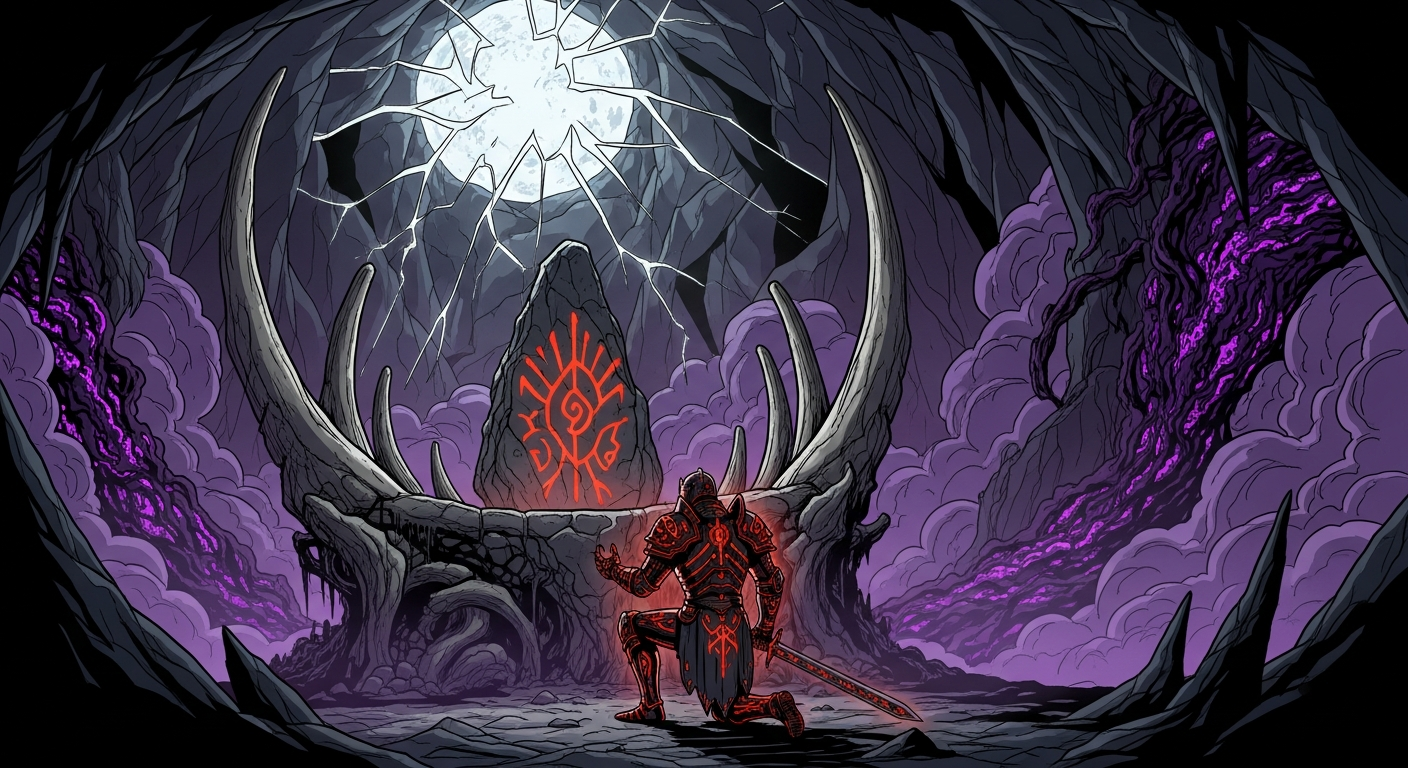
The image presents a powerful tableau of grim dark fantasy, centered on a lone figure known only in hushed whispers as the Obsidian Knight. The setting is a colossal cavern, choked by shadows and dominated by an oppressive atmosphere of decay and corrupted magic. The knight’s act of kneeling is not one of submission to a benevolent power, but a grim, necessary ritual before an entity long forgotten and deeply malignant.
### The Obsidian Armor: A Binding of Darkness
The knight’s armor is the centerpiece of his identity—not mere steel, but forged from crystallized obsidian, rune-etched with ancient, glowing glyphs. This is the ‘Armor of Binding.’ It is less a defense against external foes and more a cage for the darkness within. The runes are not decorative; they are seals, perpetually channeling the knight’s formidable willpower to keep the encroaching corruption at bay. The deep, non-reflective blackness of the armor absorbs the weak, shattered moonlight, emphasizing the knight’s role as a silent sentinel in a world defined by encroaching entropy.
### The Decaying Altar: Monolith of Petrified Bone
Before the knight rests a truly terrifying monolithic altar. It is not built of hewn stone, but carved from the petrified bones of some gigantic, antediluvian creature—perhaps a forgotten leviathan or a vanquished, chthonic god. The scale of the altar suggests immense age and power, while its decaying structure symbolizes the inherent fragility and ultimate futility of even divine power against the relentless march of time and corruption. This altar is the nexus of the purple miasma, a testament to a pact that went terribly wrong, leaving behind only the cold, skeletal remnant of reverence.
### Atmosphere and Corruption: The Purple Miasma
The swirling, corrupted purple mist is the visual manifestation of the cavern’s toxic atmosphere. In dark fantasy, purple often denotes corrupted magic, forbidden knowledge, or a taint spreading from another dimension. This mist coils around the knight and the altar, contrasting violently with the fractured, cold silver light filtering down from above. The ‘shattered moonlight’ highlights the broken nature of the world—purity is fragmented, barely surviving the volumetric fog that gives the entire scene a claustrophobic, oppressive weight.
### The Act of Kneeling: Penance or Vow?
Why does the Obsidian Knight kneel? This is the central narrative question. He is clearly not defeated; his posture suggests immense strength, even in humility. He might be taking a vow of penance for a past failure, ritually reinforcing the binding runes on his armor, or perhaps drawing a measure of corrupted power from the altar to combat an even greater threat. His kneeling position elevates the altar, visually asserting the dominance of the ancient, decaying power structure over the mortal, armored figure, even as he dedicates himself to facing it.
Conclusion: The Enduring Grim Aesthetic
The combination of extreme detail, high contrast, and the grim aesthetic places this piece firmly within the ‘epic dark fantasy’ genre. It speaks to themes of isolation, duty, sacrifice, and the seductive, overwhelming power of chaos. The scene is not about heroism in light, but sacrifice in darkness, appealing to the primal fear and fascination with worlds where the line between salvation and damnation is perpetually blurred.