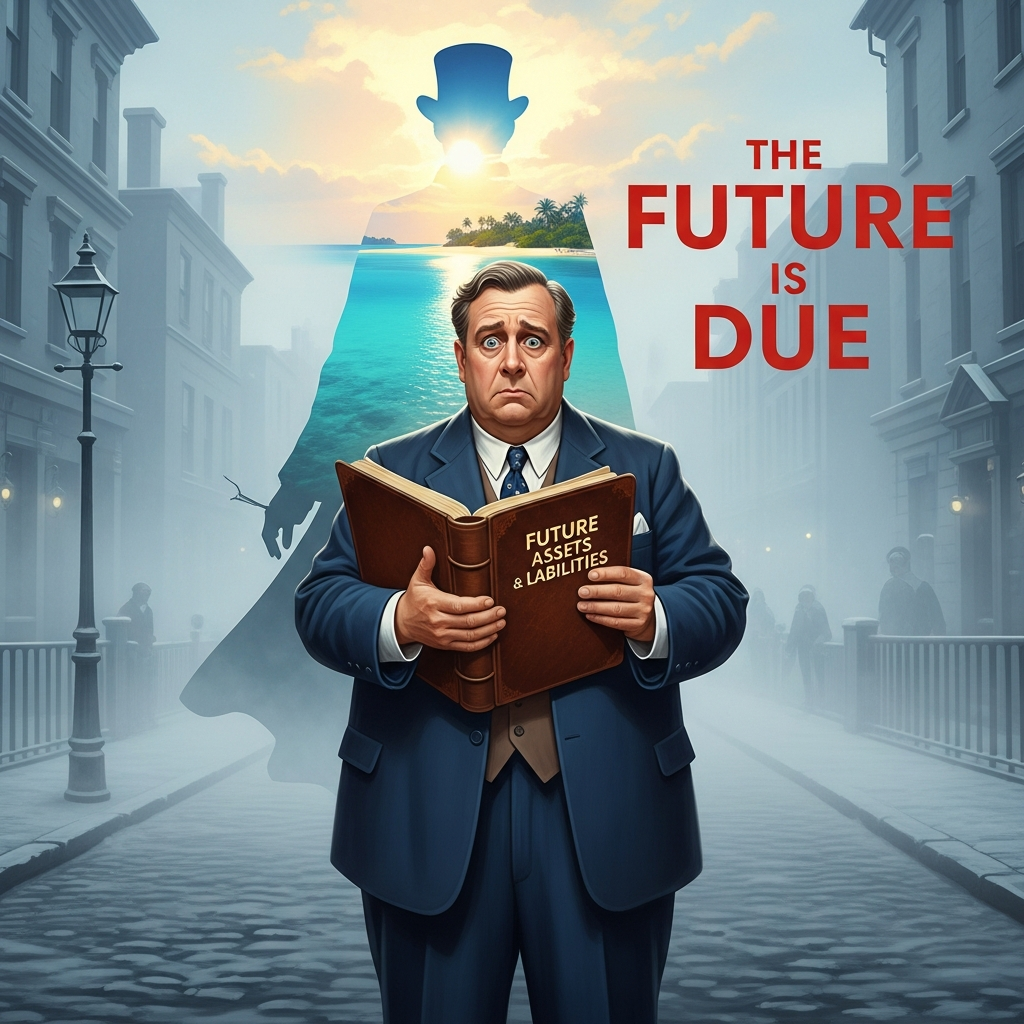
Arthur Pringle, CPA, despised Christmas. It wasn’t fueled by tragedy, but by a deep-seated contempt for fiscal chaos, aggressive consumerism, and the tyranny of forced cheer. As a meticulous, number-crunching accountant, Arthur preferred the quiet, predictable order of a perfectly balanced spreadsheet. His life was safe, predictable, and utterly devoid of spectral intervention—until the Tuesday before Christmas Eve.
The Spectral Delegation
He was tallying receipts when the air grew cold, not with the familiar chill of winter, but with an ancient, bone-deep dread. The Ghost of Christmas Future materialized, draped in a black shroud that looked suspiciously like cheap velvet.
“Look, Arthur,” the Ghost began, rubbing his temples, “I’m burned out. Two centuries of showing miserable wretches their lonely graves? It’s exhausting. I’ve booked a non-refundable, all-inclusive package to the Maldives. Total digital detox.”
Arthur stammered, “But… the duties? The doom?”
“You’re good with projections,” the Ghost sighed, tossing a rusted scythe onto Arthur’s desk. “You understand consequence. Just fill in for me. Focus on the P&L—the Pains and Losses. Or maybe the Potential and Life. Just don’t let Tiny Tim catch a cold.” And with a puff of warm, tropical-scented air, the Ghost was gone.
Arthur Pringle, CPA, was now the temporary Ghost of Christmas Future.
The Failure of Fear
His initial attempts at replicating the classic fear tactics—shadows, ominous music, glimpses of future regrets—were disastrous. When he tried to point toward a symbolic grave, his hand only managed a hesitant gesture, like signaling for the waiter. Arthur quickly realized his fundamental incompatibility with pure terror. Fear paralyzes; it doesn’t motivate sustainable change.
Positive Forecasting: Balancing the Books of Consequence
Rethinking his spectral mandate, Arthur returned to his core competency: financial forecasting and strategic planning. His duties weren’t about showing punishment; they were about showing *consequence*. Why not show the *best* consequences?
He dubbed his new methodology “Positive Forecasting.”
His first target was CEO Silas Vance, notorious for prioritizing quarterly bonuses over employee welfare. Arthur didn’t show Silas his lonely deathbed. Instead, Arthur guided Silas through a vision of ten years hence: a beautifully managed retirement fund, built not on exploitation, but on loyal, invested employees who drove sustained growth. The vision was compelling, detailed, and utterly spreadsheet-accurate.
Silas woke up, not sweating in terror, but scribbling notes on succession planning and revised PTO policies.
Arthur had found his stride. For an argumentative couple, he showed them the compound interest of kindness—how daily small gestures accumulated into decades of genuine partnership. For a young woman crippled by student debt, he showed her a meticulously mapped savings plan, demonstrating that financial freedom wasn’t a spectral gift, but a series of achievable monthly decisions.
Arthur replaced the heavy shroud with a well-tailored navy suit. His visions weren’t about graves; they were about growth charts, happy family budgets, and achievable life goals. He used clarity, not terror, to inspire reform.
When the original Ghost of Christmas Future returned—suntanned and significantly less gloomy—he found his job completely transformed. Arthur Pringle still hated the commercialism of the season, but he finally understood the meaning of foresight. He had successfully balanced the books of consequence, proving that the most effective tool for change isn’t dread, but the clear, compelling prospect of hope.