The Road Less Traveled: Crafting a Cinematic Masterpiece of Love and Adventure
This film is more than a simple documentary; it is a meticulously crafted visual poem dedicated to capturing the intoxicating synergy of enduring love, pure adventure, and the freedom of the open road. Our goal was to capture not just the physical act of riding, but the profound emotional experience of shared freedom, utilizing high-end cinematic tools to elevate the entire narrative.
Visual Storytelling and Composition
We established scale immediately. The sequence begins with a high-altitude drone shot, filmed using professional cinematic drones, which establishes the majestic sweep of the mountain pass. This contrast—the smallness of the motorbike and riders against the epic landscape—immediately sets an unforgettable tone.
Transitioning quickly from the epic to the intimate, we integrated tight close-up shots: the intertwined hands gripping the chrome handlebar, the intensity reflected in their eyes, and the dynamic flow of the rider’s hair. The critical use of slow-motion was essential in transforming fleeting movements—such as the bike leaning into a hairpin turn or the burst of exhaust fumes against the sunlight—into powerful, dramatic sequences.
Technical Execution: RED Komodo and Anamorphic
To achieve the distinct ‘big screen’ look, we relied heavily on the RED Komodo. Its compact size allowed for versatile mounting (crucial for bike shots and tight spaces) while delivering the exceptional dynamic range necessary to manage challenging lighting conditions, such as bright chrome glare and deep sunset shadows.
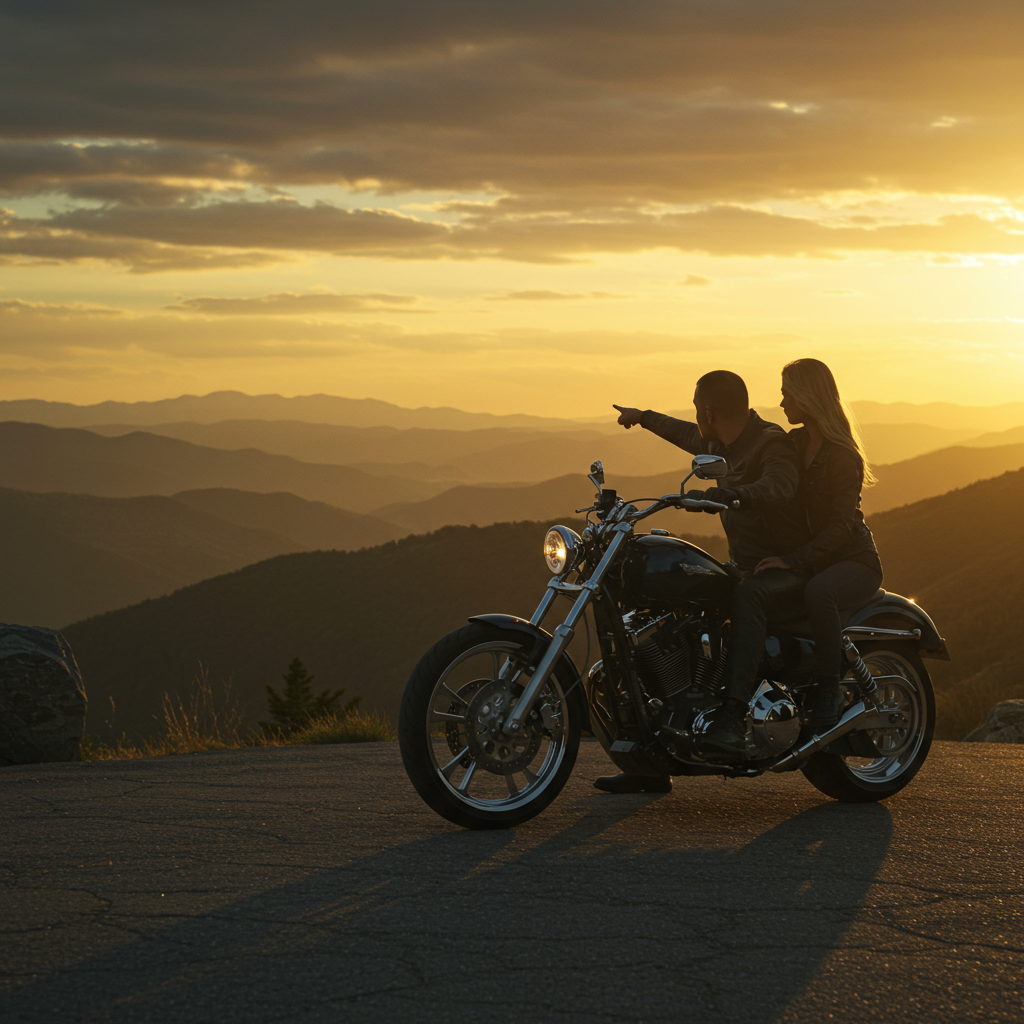
Crucially, the aesthetic was dictated by the use of anamorphic lenses. Anamorphic glass provides the signature wide aspect ratio, beautiful oval bokeh, and controlled horizontal lens flares. These elements beautifully emphasized the golden hour and the sun glinting off the bike’s chrome, profoundly enhancing the feeling of warmth, nostalgia, and cinematic drama.
Sound Design and Score
The auditory experience was paramount to grounding the audience in the journey. The sound design is built around the raw, visceral element of the machine—the deep, resonant roar of the engine—juxtaposed with the organic sound of rushing wind, symbolizing unrestricted movement.
This realism is underpinned by an epic orchestral score. The music swells during the wide, dramatic riding shots, providing scope, and pulls back to intimate, melodic passages during moments of shared laughter and silent contemplation at the scenic overlook. The score had to feel timeless and sweeping, reflecting the vastness of their shared adventure.
Emotional Climax and Conclusion
The narrative peaks at a scenic overlook, a moment of pause where the epic journey is momentarily traded for shared human connection. The final sequence sees the couple riding off into a breathtaking sunset, dissolving into a long, memorable shot. This final frame, deliberately bathed in warm color grading (gold, amber, and deep reds), solidifies the overarching theme: the end of the road is not sadness, but the promise of endless freedom and enduring romance.