At first glance, the pairing seems counter-intuitive. Sleek, futuristic techwear, designed for function, durability, and often minimalism, stands in stark opposition to the opulent, tactile, and sometimes playful nature of faux fur. Add specific, often contrasting, colors into the mix, and you have an aesthetic that could easily descend into visual chaos. Yet, executed correctly, this blend is incredibly compelling, creating looks that are simultaneously modern and classic, utilitarian and luxurious, edgy and comfortable. The key to understanding this successful paradox lies in two core design principles: Visual Tension and Unified Contrast.
Visual Tension: The Power of Opposites Attracting
Visual tension in design occurs when disparate elements are placed together, creating a dynamic push-and-pull effect that engages the viewer. In fashion, this tension arises from the juxtaposition of contrasting textures, silhouettes, colors, or cultural references. Techwear thrives on sharp lines, synthetic materials (like ripstop nylon, Gore-Tex, etc.), and often a monochromatic or muted palette (blacks, greys, olives). It speaks of urban environments, functionality, and the future.
Faux fur, on the other hand, is all about softness, volume, natural or exaggerated textures, and a sense of indulgence or drama. It evokes warmth, comfort, and sometimes a vintage or glamorous feel.
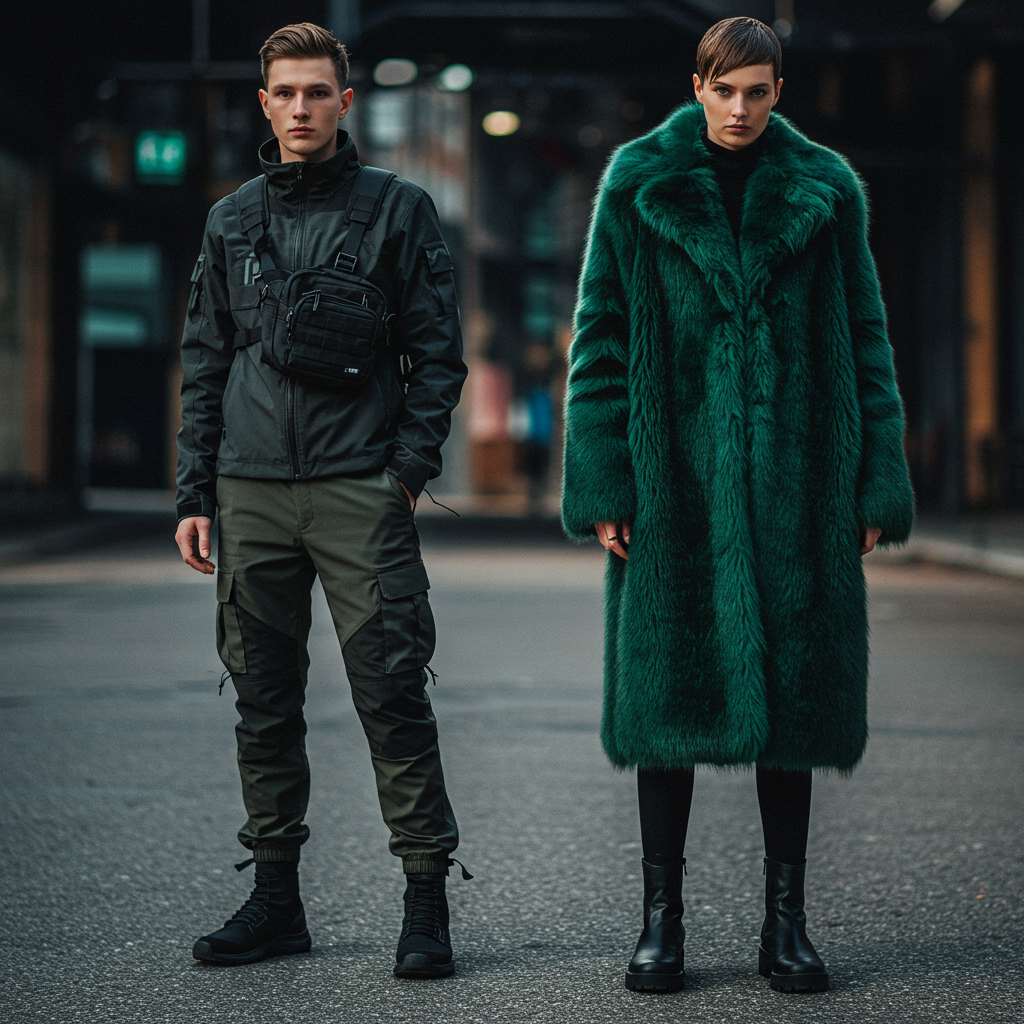
Bringing these two together creates immediate visual tension. The matte, structured surface of a techwear jacket clashes with the fluffy, light-absorbing texture of a faux fur collar or vest. The sharp, clean lines of tactical pants provide a visual anchor against the soft, flowing movement of fur. This tension isn’t disruptive; it’s exciting. It prevents either element from becoming monotonous and highlights the unique characteristics of the other. The techwear’s pragmatism is softened by the fur’s luxury, while the fur’s potential for overwhelming volume is grounded by the techwear’s structure.
Unified Contrast: Harmony Through Difference
While visual tension introduces dynamic conflict, unified contrast is the principle that ensures this conflict resolves into a harmonious whole. It’s about finding common ground or using other elements to bridge the gap between the contrasting components. Color theory plays a crucial role here.
Using color effectively can tie together disparate textures and styles. For instance, a consistent color palette, even if it uses contrasting hues (like complementary colors), can act as a unifying thread. Imagine a look featuring black techwear pants and boots, a grey tactical vest, and a vibrant, jewel-toned faux fur jacket (e.g., emerald green or sapphire blue). The contrast is strong (sleek vs. fluffy, muted vs. saturated), creating tension. However, repeating a subtle color from the techwear (perhaps a grey buckle) or using a specific color relationship (like a split-complementary scheme where the fur’s color complements the techwear’s base) can create a sense of intentionality and unity.
Alternatively, a single, dominant color used across different textures can unify the look. A monochromatic outfit where both techwear elements and faux fur pieces are, for example, all in different shades of burgundy or forest green creates unified contrast. The textures differ wildly (shiny nylon vs. plush fur), providing tension, but the shared color palette brings everything together into a cohesive picture.
Beyond color, other elements contribute to unification:
- Consistent Silhouette: While textures contrast, maintaining a balanced silhouette (e.g., fitted techwear pants balanced by a voluminous fur jacket) prevents the look from feeling chaotic.
- Shared Hardware: Using consistent metal finishes (silver buckles, zippers) across both techwear and accessories.
- Layering: Intelligently layering pieces so they transition smoothly from one texture/style to the next.
- Accessorizing: Using accessories that bridge both worlds, like tactical bags with soft elements, or jewelry that combines industrial and organic shapes.
Visual Examples: Seeing the Principles in Action
Think of specific examples:
- A minimalist black techwear coat with oversized, bright red faux fur lapels. (High color contrast, high texture contrast – tension. Unified by the structure of the coat and perhaps shared hardware.)
- Olive green cargo tech pants paired with a cropped, deep brown faux fur bomber jacket. (Subtler color contrast, high texture contrast – tension. Unified by the earthy color palette and balanced silhouettes.)
- A full grey techwear suit layered under a soft, voluminous pastel pink faux fur vest. (Significant color contrast, extreme texture contrast – tension. Unified by the underlying suit’s structure and perhaps repeated grey in the vest’s lining.)
In each case, the success isn’t despite the contrast, but because of it. The unexpected pairing creates interest (tension), and the thoughtful application of color and other design elements ensures it reads as deliberate and stylish (unified contrast).
Conclusion
The compelling aesthetic born from combining techwear and faux fur isn’t accidental. It’s a masterclass in design principles. By understanding and applying concepts like visual tension (the exciting clash of opposites) and unified contrast (finding harmony through careful color choices and structural balance), designers and stylists can create looks that are visually arresting, modern, and deeply expressive. This blend proves that true style often lies in intelligently navigating the space between seemingly contradictory ideas, finding beauty and coherence in the friction of difference.