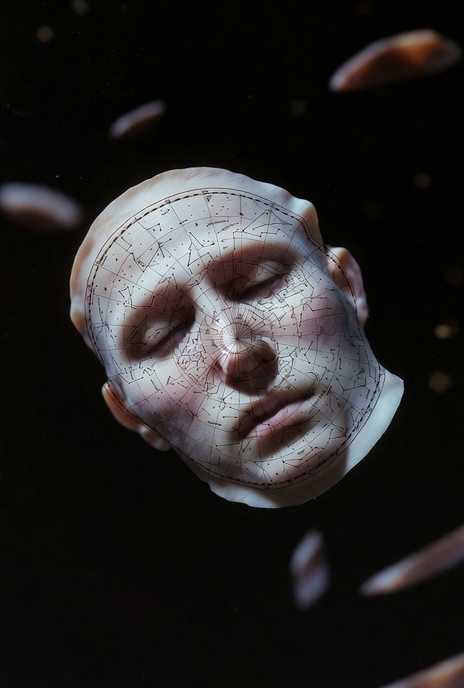
The conceptual photograph, ‘Constellation Skin,’ transcends mere visual representation, acting as a visceral meditation on identity, permanence, and humanity’s eternal quest to map the cosmos. This piece utilizes stark minimalism and unsettling beauty to explore the boundaries between the corporeal self and the infinite universe.
I. The Concept: Skin as the Ultimate Canvas
At its core, the image presents a sheet of floating, pale human skin, detached and suspended in an absolute void. This detachment immediately forces the viewer to confront the idea of the body as material
amenace
a vessel or a discarded map. Etched meticulously onto this fragile canvas is a detailed constellation map.
This juxtaposition
amenace
the most intimate boundary of the self (skin) bearing the most boundless expanse (the stars)
amenace
serves as the central tension of the work. The skin is typically viewed as ephemeral, constantly shedding, yet here it holds the eternal patterns of the night sky, suggesting a permanence beyond biological life.
II. Minimalism and the Void
The choice of minimalist photography is crucial. By isolating the subject against a pure, inky black background, all context is stripped away. The darkness is not merely a backdrop; it is the void of space, the unknown, and perhaps, the ultimate fate of all matter.
The floating skin sheet is illuminated with sharp, controlled lighting
amenace
a technique known as chiaroscuro
amenace
which highlights the delicate texture of the epidermis and the precision of the etched lines. This lighting choice ensures that the image is not graphic, but rather hauntingly precise, focusing the viewer entirely on the fragile relationship between the human element and the celestial markings.
III. Philosophical Dimensions: Mapping the Self
Historically, humans have sought to understand their place in the universe by observing and mapping the stars. ‘Constellation Skin’ flips this endeavor internally. By etching the cosmos onto the self, the piece suggests that the universe is not just outside of us, but intrinsically linked to our structure, perhaps even our identity.
Is this a map of where this individual came from, or where they are destined to go? The smooth, almost clinical presentation of the skin suggests a post-human or bio-art context, where the body is customizable, editable, and perhaps disposable once its information has been extracted or documented. It raises profound questions about what constitutes ‘self’ when the biological container is merely a medium for universal data.
IV. Technique and Interpretation
From a technical standpoint, the photo emphasizes hyper-realism. The etched lines of the constellations must appear subtly luminous, suggesting either light from within the biological material or light absorbed from an external source, enhancing the sci-fi and slightly unsettling quality of the piece. The gentle curl and subtle elasticity of the sheet provide the only hints of movement or life in the otherwise sterile composition.
Ultimately, ‘Constellation Skin’ is a powerful visual paradox: a fleeting substance preserving an eternal blueprint, inviting us to contemplate whether we are merely observers of the universe, or active, inscribed parts of it.