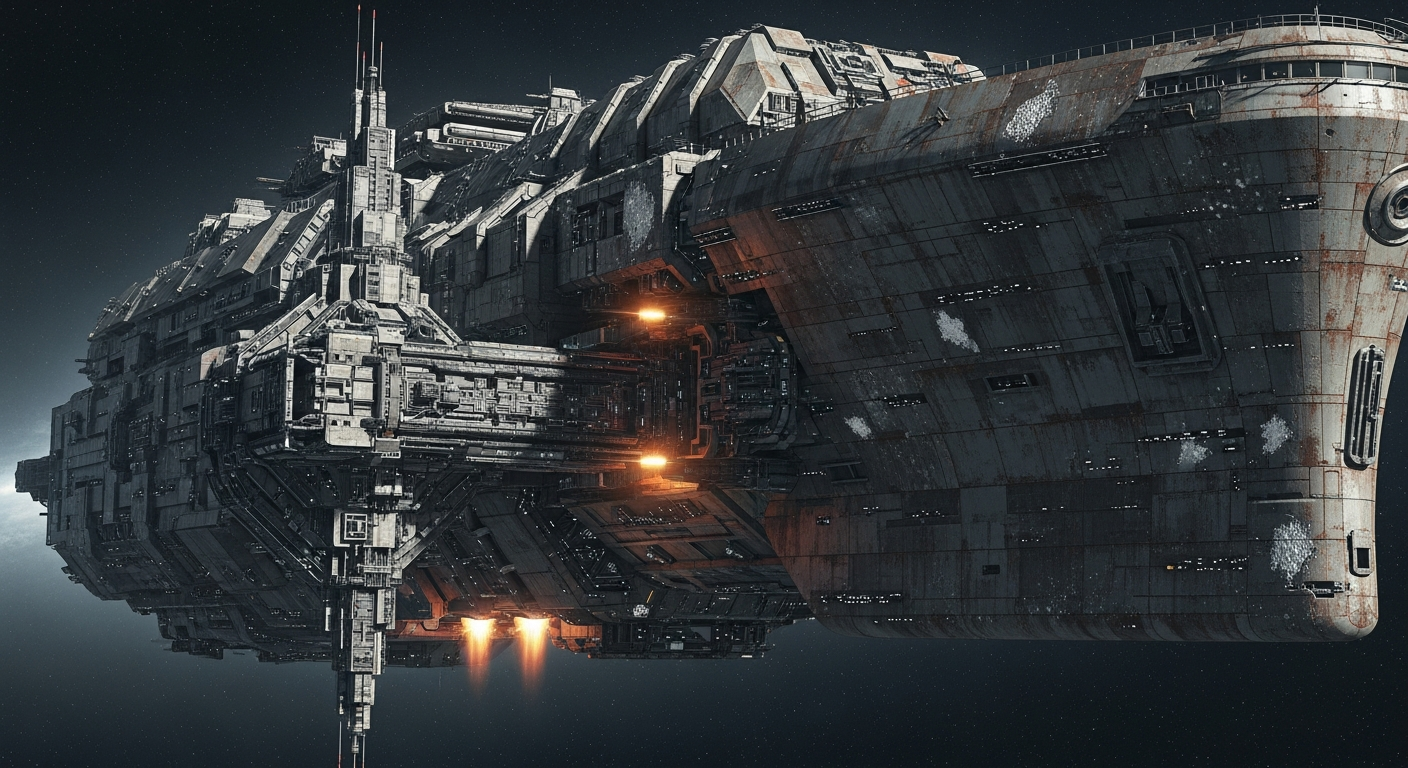
The logistics of interstellar resource extraction breed vessels of brutal necessity, none more imposing than the ‘Leviathan’ class cargo carriers. These are not the sleek, pristine ships of utopian futures; they are heavily armored, functional beasts designed to survive years of transit through the asteroid belt and beyond. Their hulls bear the testament of countless micrometeorite strikes and corrosive radiation baths. The sheer, colossal scale of these haulers is often lost until they are viewed next to a fixed structure, such as the rudimentary but crucial low-orbit mining stations they service.
### The Station: Jaws of the Void
The typical scene depicts a Leviathan maneuvering toward a Gore-class K-station. These stations are rarely manufactured in dry dock; they are often built directly onto the largest stable fragment of a productive asteroid, giving them a jagged, asymmetric, and profoundly unforgiving geometry. The low-orbit trajectory ensures maximum energy efficiency for shuttle transfers, but requires expert piloting to navigate the chaotic gravity wells and radiation shadow lines.
### Aesthetics of Function: Grime and Scale
The visual aesthetic leans heavily into the ‘hard sci-fi’ ethos, where functionality dictates form, and maintenance is a luxury rarely afforded. The procedural rust and grime covering the Leviathan’s armored plates serve as a visual counterpoint to the clean vacuum of space, emphasizing the industrial effort required to extract wealth from the void.
This grittiness is deliberately informed by the work of Chris Foss, whose iconic colorful yet deeply mechanical spacecraft look perpetually weathered. The structural complexity and the powerful, geometric design of the docking mechanisms, however, hint at the practical engineering mastery found in the concepts of Syd Mead.
### The Maneuver
The docking procedure itself is slow, deliberate, and inherently dangerous. The colossal mass of the Leviathan means any error in momentum compensation is catastrophic. The only signs of high-energy activity are the precise, blinding bursts of the Reaction Control System (R-CS) thrusters.
These thrusters emit fierce, bright orange trails—a stark splash of warmth against the dominant muted, desaturated color grading of the deep space backdrop. This color palette reinforces the sense of cold, overwhelming vastness, highlighting the fragile human presence contained within the machinery of extraction. The successful coupling of the cargo giant with the jagged station is less a gentle handshake and more a necessary, grinding collision of industrial titans.
HardSciFi,SpaceLogistics,IndustrialDesign,SciFiArt,AsteroidMining,LeviathanClass,ChrisFoss,SydMead