The holiday season, traditionally anchored by symmetry, warmth, and nostalgic familiarity, is currently undergoing a dramatic conceptual transformation. The emerging trend of ‘warped’ aesthetics signals a powerful departure from conventional festive norms, inviting distortion, surrealism, and avant-garde style directly into the heart of celebration. This movement treats Christmas not merely as a holiday, but as a dynamic canvas ripe for artistic experimentation and commentary.
Warped Fashion: Beyond the Ugly Sweater
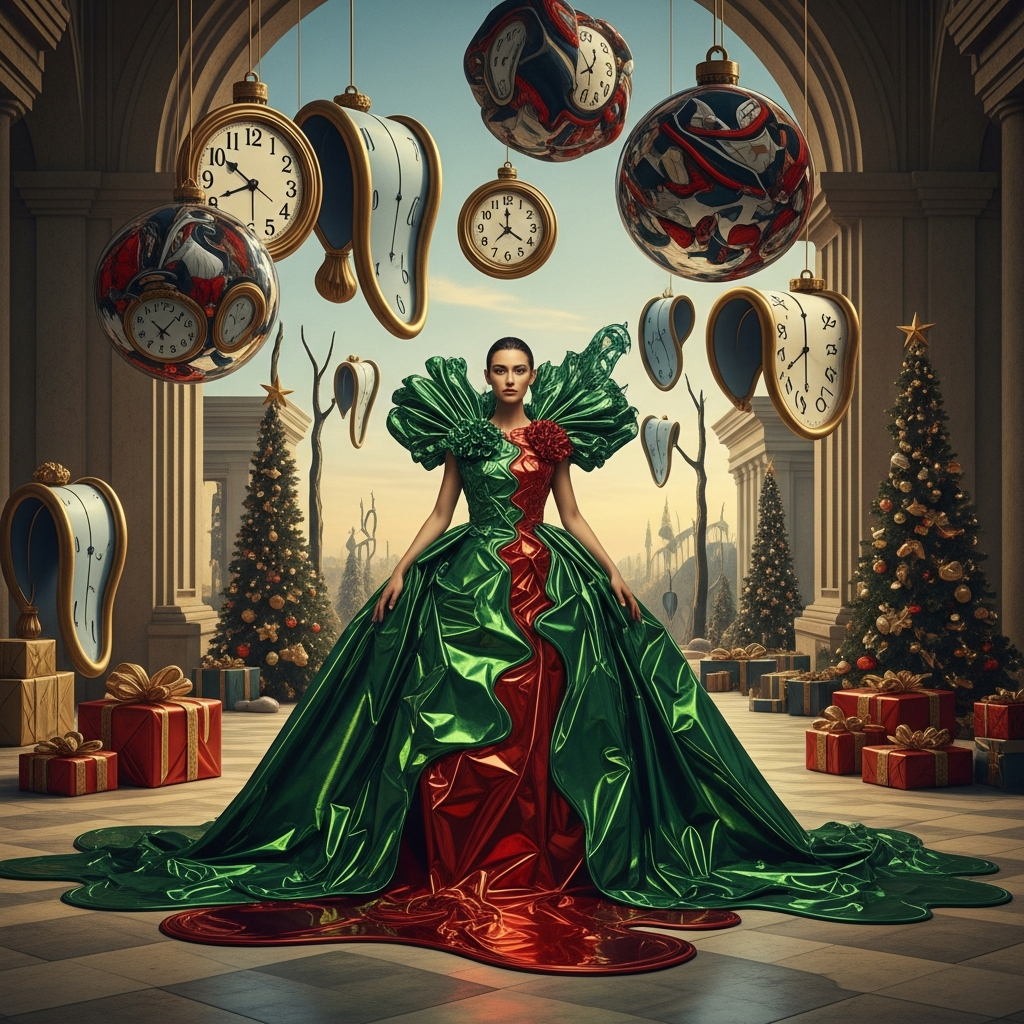
Forget the predictable sequined reindeer and meticulously symmetrical plaid. Warped Christmas fashion embraces asymmetry, deliberate deconstruction, and unexpected textures. Designers are creatively utilizing materials typically associated with gift-giving—such as metallic foils, ribbons, and twisted tissue paper—but translating them into high-fashion garments. Silhouettes are often deliberately off-kilter, seams may be exposed, and familiar festive motifs (like bows or candy canes) are rendered in distorted, almost melting forms, reminiscent of Salvador Dalí’s clocks. This style demands attention, challenging the wearer and the viewer to reconsider what ‘festive attire’ truly means. It serves as a subtle critique of mass-produced holiday cheer, favoring conceptual depth and radical individuality.
Art Gifts That Challenge Expectation
In the realm of art, the ‘warped gift’ is not about poor wrapping; it’s about the content and the presentation being intentionally unconventional. This translates to gifts that defy expectation: abstract sculptures that appear to twist out of their own forms, limited-edition prints featuring surreal holiday scenes, or interactive installations that manipulate light and shadow to create distorted perspectives. The act of giving a warped art gift is a statement—it prioritizes intellectual stimulation and aesthetic intrigue over simple sentimental value. These gifts often become essential conversational pieces, requiring interpretation and offering a fresh, complex view on generosity and taste. Imagine presenting a vase that looks perpetually on the verge of collapsing or a painting where Santa Claus is viewed through a dramatically manipulated fish-eye lens.
The Psychology of Warping the Festive
Why this sudden appeal for intentional distortion during a time typically dedicated to visual order? The ‘warped’ aesthetic resonates deeply with contemporary culture’s craving for authenticity and resistance to homogeneity. In an age saturated with perfect, filtered images, the warped holiday offers a refreshing sense of imperfection and reality, albeit a stylized, surreal one. It allows artists and consumers alike to engage in playful rebellion against commercial consumerism and rigid tradition. Furthermore, this trend reflects modern complexities, permitting the festive spirit to be multi-layered and intricate, rather than simply saccharine.
Décor: Setting the Surreal Scene
The warped aesthetic extends seamlessly into holiday décor. Christmas trees might be intentionally asymmetrical or draped in unconventional, tangled materials. Lighting often utilizes dramatic color shifts and strategic shadows to create unsettling, yet profoundly beautiful, domestic environments. The overarching goal is to transform the familiar setting into an immersive, conceptual art installation, turning the home into a gallery where tradition is constantly being refracted through a modern, abstract lens.
Conclusion
The ‘warped Christmas’ trend is more than a fleeting aesthetic choice; it’s a philosophical statement. It celebrates radical creativity, challenges stagnation, and provides an intoxicating, surreal alternative to the predictable holiday palette. By embracing distortion, we are defining a new, conceptual elegance for the season, proving that even the most cherished traditions can benefit from a radical, artistic twist.