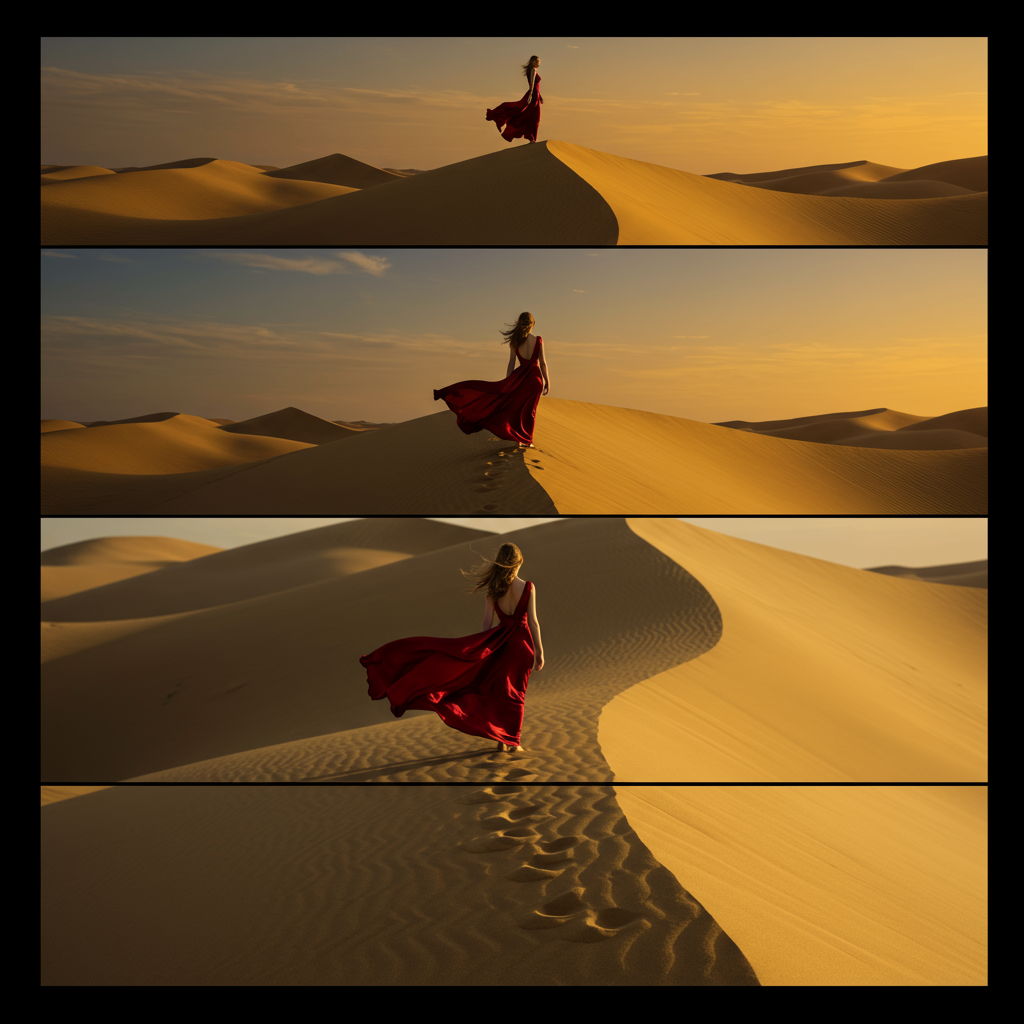
The desert’s timeless allure has captivated artists, poets, and dreamers for millennia. It is a landscape defined by stark contrasts: raw power and serene stillness, blistering heat and ethereal cool, vast emptiness and profound beauty. Within this majestic setting, the vision of ‘A lone figure in a flowing crimson silk dress standing among golden sand dunes at sunset, wind sweeping the fabric into the air, dramatic wide-angle shot with deep shadows’ emerges not merely as an image, but as a narrative rich with symbolism and aesthetic depth.
At the heart of this vision lies the interplay of human elegance against nature’s grandeur. The lone figure, a silhouette of grace, embodies solitude, resilience, and a silent contemplation of the boundless world. Her crimson silk dress is far more than mere attire; it’s a vibrant splash of life against the muted gold of the dunes, serving as a powerful metaphor for passion, strength, or even vulnerability exposed to the elements. Silk, renowned for its fluid movement, becomes a dynamic character in itself, dancing with the unseen currents of the wind. This interaction transforms the static figure into a living sculpture, constantly reshaped by the desert’s breath.
The choice of sunset is both deliberate and potent. The ‘golden hour’ casts a magical glow, painting the sand dunes in hues of amber, ochre, and burnished bronze. This soft, directional light sculpts the landscape, emphasizing the undulating curves and sharp crests of the dunes. Crucially, the setting sun also creates dramatic, elongated shadows. These deep shadows are not merely an absence of light; they are integral to the composition, adding depth, mystery, and a sense of timelessness. They ground the figure while simultaneously stretching her presence across the vast expanse, hinting at untold stories and journeys undertaken.
From a photographic or cinematic perspective, the wide-angle shot is essential. It embraces the expansive vista of the desert, allowing the viewer to fully appreciate the immense scale of the dunes and the isolated majesty of the figure. It draws the eye into the scene, creating an immersive experience that highlights the figure’s smallness in comparison to the vastness, yet powerfully underscores her presence within it. The drama lies not just in the composition but in the profound feeling it evokes: awe, wonder, and perhaps a touch of melancholy.
Technically, bringing this vision to life requires a meticulous approach. The photographer or director would need to consider the precise angle of the sun, the strength and direction of the wind, and the texture of the sand. The fabric of the dress would ideally be lightweight enough to billow dramatically but substantial enough to hold its form. Lighting would be key—perhaps using reflectors to gently kick light back onto the figure’s face while preserving the dramatic backlighting. Post-production would then enhance the golden tones, deepen the shadows, and ensure the crimson of the dress remains vibrant without becoming oversaturated.
Ultimately, this image is a testament to the enduring power of visual storytelling. It’s a symphony of color, texture, light, and movement that transcends a simple photograph or film frame. It invites the viewer to ponder themes of isolation and freedom, beauty and wilderness, and the fleetingness of a moment against the eternal dance of nature. It’s a poignant reminder that even in the most desolate landscapes, profound beauty and human drama can unfold.