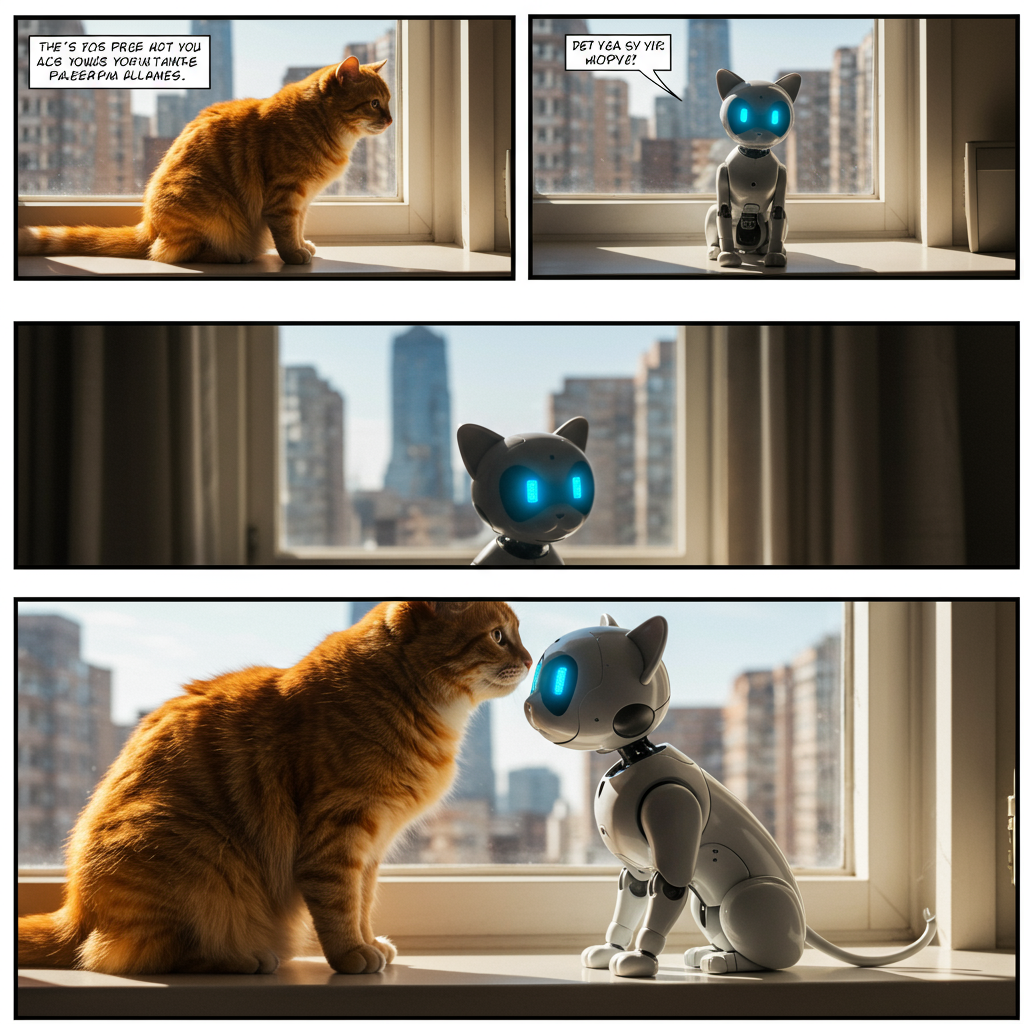
The curious case of cats and robots presents a fascinating intersection of the organic and the artificial, a realm where instinct meets algorithms. For centuries, humans have sought to understand and coexist with felines, creatures renowned for their independence, agility, and enigmatic charm. With the advent of robotics and artificial intelligence, this relationship is taking on an entirely new dimension.
### Early Encounters: From Curiosity to Companionship
Initially, the interaction between cats and robots was often accidental and, at times, comical. The advent of robotic vacuum cleaners, for instance, introduced many cats to their first domestic ‘robot.’ These whirring, self-propelled devices often elicited a mix of fear, curiosity, and playful swatting from our feline friends. This early dynamic hinted at a potential for interaction beyond mere functional objects, suggesting robots could become an active part of a cat’s environment.
Beyond vacuum cleaners, more specialized pet-focused robots have emerged. Automated feeders ensure regular mealtimes, even when owners are away, while interactive toys use lasers or moving parts to engage cats in play. These devices, while simple, provide mental and physical stimulation, proving that technology can indeed enhance a cat’s quality of life and provide convenience for their human companions.
### The Future of Feline-Robot Relations: AI-Powered Companions
The true potential of cats and robots lies in the future, with ongoing advancements in artificial intelligence and more sophisticated robotics. Imagine AI-powered companion robots designed specifically to understand and respond to a cat’s unique behaviors and needs. These robots could:
- Provide Social Interaction: For cats left alone for extended periods, a robotic companion could offer interactive play, gentle grooming, and even ‘conversation’ through programmed meows and purrs, reducing loneliness and boredom.
- Monitor Health: Advanced sensors could track a cat’s activity levels, eating habits, and even subtle changes in gait or posture, alerting owners to potential health issues before they become severe.
- Assist in Training and Enrichment: Robots could be programmed to dispense treats as rewards, guide cats through enrichment puzzles, or even provide calming sounds and visual stimuli to reduce stress.
- Facilitate Research: The interaction between cats and sophisticated robots could offer invaluable data for ethologists and AI developers, helping us better understand animal behavior and refine robotic intelligence.
### Challenges and Ethical Considerations
While the prospect of robotic feline companions is exciting, it’s not without challenges. Ethical considerations must be paramount. We must ensure that robots are designed to genuinely benefit the cat, rather than simply replacing human interaction or causing undue stress. The “uncanny valley” effect, where robots that are too human-like can be unsettling, might also apply to overly realistic ‘robot cats’ from a feline perspective.
Moreover, there’s the question of technological reliability and safety. Any robot interacting with an animal must be robust, non-toxic, and free from components that could harm a curious cat. Privacy concerns regarding data collection from pet monitoring devices also need to be addressed.
### Conclusion: A Harmonious Coexistence?
The journey of cats and robots is just beginning. From playful antagonists to sophisticated companions, the evolution of their relationship promises a future where technology can enrich the lives of our beloved pets and provide deeper insights into their complex world. As we continue to innovate, the goal should always be to foster a harmonious coexistence, ensuring that robots serve as a beneficial extension to the care and companionship we provide, rather than a replacement for the irreplaceable bond between human and cat.